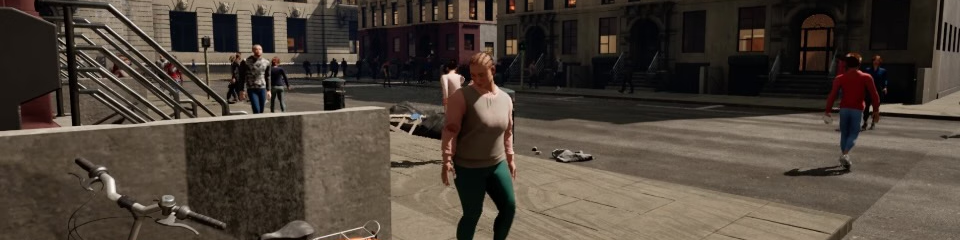
Animation orchestration for the gaming industry. Next-generation crowd animation and automation system.
I was COO of the company that built TEX, overseeing operations and the production pipeline that brought it from concept to working prototype.
The challenge
Producing large-scale, high-fidelity crowd animation remains a costly and rigid process. Traditional pipelines require extensive motion capture libraries, manual labor, and heavy integration work.
Even modern generative models fail to scale efficiently, they often break on skeleton mismatches, require retraining for new conditions, and explode compute costs as crowd size grows. These limitations make large-scale, context-aware animation economically and technically prohibitive across gaming, simulation, and virtual production.
The solution
TEX introduces a modular, AI-driven approach to procedural animation. Instead of treating motion as monolithic sequences, TEX decomposes animation into atomic additive blocks and uses a context engine to dynamically recombine them per character.
Each actor’s behavior adapts to environment, personality profile, and scenario cues. This results in organic, non-repetitive motion at scale, without the data overhead or retraining cycles.
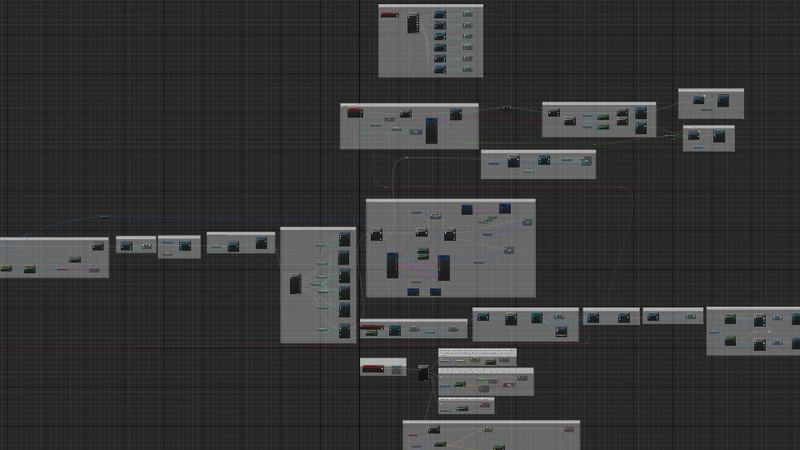
Key capabilities
- Massive diversity from minimal data: Hours of unique motion from ~140 s of source animation.
- Context-aware recombination: Motion varies per character based on scene and behavior.
- Cross-skeleton compatibility: Works across rigs with minimal retargeting overhead.
- Scalable & flexible: Easily deployable in games, AR/VR, simulation, and cinematic pipelines.
- Rapid iteration: New behaviors created by recombination, not costly data collection.
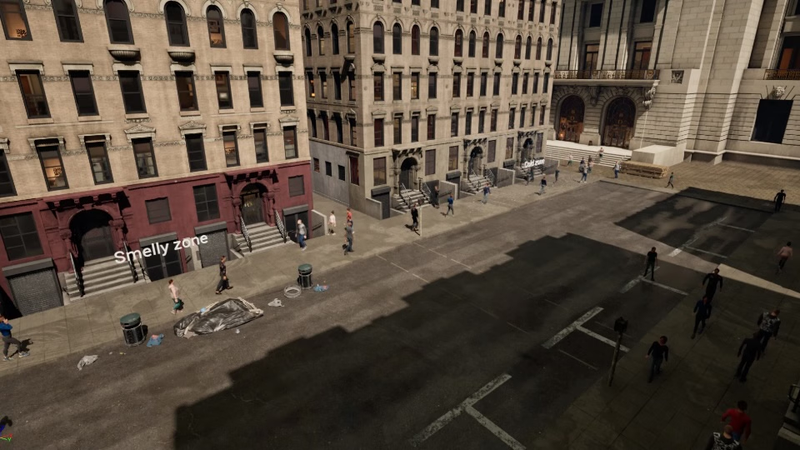
Prototype results
In a prototype deployment:
- 100 characters navigate an urban environment across four environmental contexts.
- Only 140 seconds of base animation were used to generate hours of non-repeating motion.
- Performance remained stable across skeletons, with near-zero manual intervention required.
Outcomes
- Animation production cost and time reduced by an order of magnitude compared to traditional pipelines.
- 140 seconds of base animation produced hours of non-repeating, context-aware motion across 100 characters.
- The core technology is portable: applicable to games, simulation, virtual production, and potentially robotics.