Building technology that doesn't yet exist sounds like a lot of fun. And it is, in stories, after the dust has settled.
I was COO, responsible for operations, production architecture, and the organizational structure that turned an impossible brief into shipping technology.
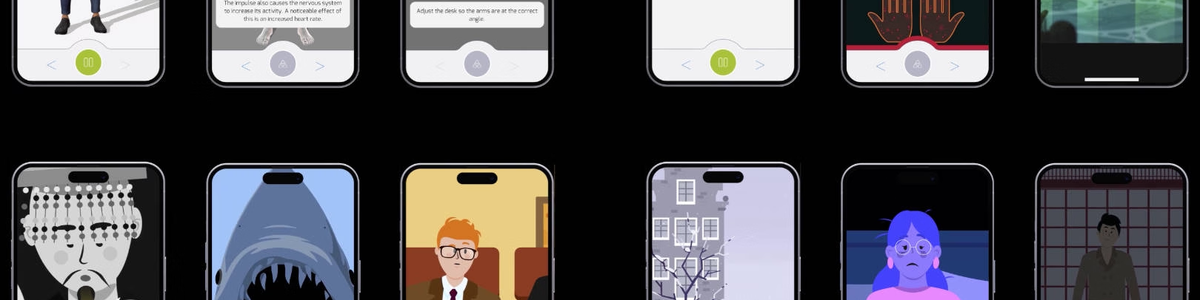
Deployed at: Zuyderland hospital group (South Netherlands). Subscription model: the entire hospital network had access. 12 avatars deployed, hundreds of daily users, tens of thousands of sessions. Users continued using the system for months after the parent company ceased operations.
The challenge
HABTIC’s stakeholders had a clear, uncompromising vision:
- A health and wellbeing coaching app
- A cast of realistic, human-like avatars
- Full offline functionality
- Continuous, adaptive learning from user behavior
None of these requirements were possible with existing technology. Conventional "digital human" solutions relied on cloud streaming and heavy infrastructure, while game-style avatars required terabytes of pre-baked content. Meanwhile, AI models were too resource-intensive and too slow to adapt dynamically on-device.
In short: the project demanded technology that did not yet exist.
Core problems
- Avatar realism: no existing engine could support hours of interactive, personalized dialogue and animation offline.
- Offline constraint: streaming-based solutions were incompatible with the requirement for fully local operation.
- Adaptive intelligence: continuous learning and path adjustment could not rely on backend inference cycles or retraining.
- Device limitations: hundreds of hours of content and behavior needed to run efficiently on consumer mobile hardware.
Solution approach
HABTIC became a technology-creation program. Two core innovations were developed to solve the unsolvable:
TALOS: the autonomous avatar engine
A bespoke animation and behavior system that:
- uses looping motion primitives recombined dynamically by layered AI.
- creates the illusion of fully responsive, lifelike coaches without streaming or massive asset payloads.
- generates real-time reactions and behaviors tailored to user context.
Result: A responsive, expressive digital coach engine that operates entirely offline. To this day, completely unmatched in its class.
SYBIL: the adaptive pathfinding engine
A novel AI architecture inspired by flocking behavior and dynamic decision-making, designed to:
- choose the next best action based on real-time context, without needing fixed start/end states.
- continuously adapt to evolving user data and content libraries.
- operate without constant retraining or expensive backend compute.
Result: A unique, real-time prognostication system that remains state-aware, lightweight, and scalable.
What this taught me
- Hard, uncompromising stakeholder requirements drove the team past what the market thought was possible. Clarity of intent is an underrated catalyst.
- Every constraint the team encountered, including ones considered impossible, was solved by reframing the problem and engineering from first principles.
- The best outcomes came from listening deeply to domain experts and investing in experimentation before committing to architecture.
Do not fear stakeholders who don’t know what they want — fear those who do. They will force you to build the future.